News & Events
A new reporting guideline on traditional Chinese medicine was released: STandards for Reporting Interventions in Clinical Trials Of Tuina/Massage (STRICTOTM)
30 November 2022
The reporting of medical research is as important as the research design and analysis. Reporting guidelines are conducive to improving the quality of academic papers. Over the last decade, reporting guidelines in the field of traditional Chinese medicine have evolved into a theoretical system, covering various research stages including trials registration, protocols, results reporting, evidence integration, and clinical practice guidelines, involving intervention measures such as traditional Chinese medicine compounds, acupuncture, and moxibustion[1].
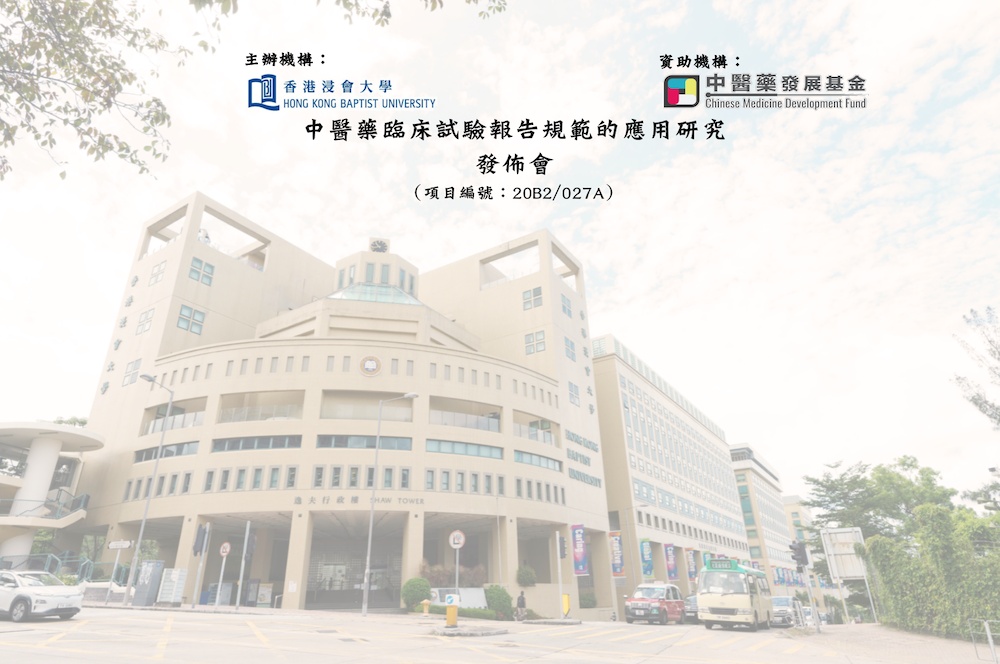
Dr. Xuan Zhang, a clinical research assistant professor in the School of Chinese Medicine at Hong Kong Baptist University, was funded by the Chinese Medicine Development Fund (CMDF) to conduct the study ‘Reporting guidelines of randomised controlled trials of tuina/massage: an extension of the CONSORT statement’. The research team systematically reviewed the development history of tuina/massage at home and abroad[2], and evaluated the quality of 2,447 papers after searching for clinical randomized controlled trials of tuina/massage published in both Chinese and English between 1990 and June 2020[3]. Following that, the reporting checklist was developed through Delphi surveys, consensus meetings, practical tests, etc. During the research, opinions were collected from experts with multi-regional and multidisciplinary backgrounds (including clinicians, researchers, clinical methodologists, statisticians, editors, epidemiologists and so on), particularly the appropriate proportion of tuina/massage clinicians to ensure the quality of the checklist. The paper ‘STandards for Reporting Interventions in Clinical Trials Of Tuina/Massage (STRICTOTM)’ has been completed and will be published in both Chinese and English.
The publication of the reporting guidelines[4] will not only help to improve the quality of the report and research of tuina/massage clinical trials and provide high-quality evidence for clinical practices, but will also aid in the establishment of a theoretical system of CONSORT extension in traditional Chinese medicine. Furthermore, although interpreted with Chinese tuina as an example, the reporting guidelines offer a wide range of applicability to other forms of massage therapies, assisting in the standardization of non-drug therapy research
More details are available at https://onlinelibrary.wiley.com/doi/10.1111/jebm.12522